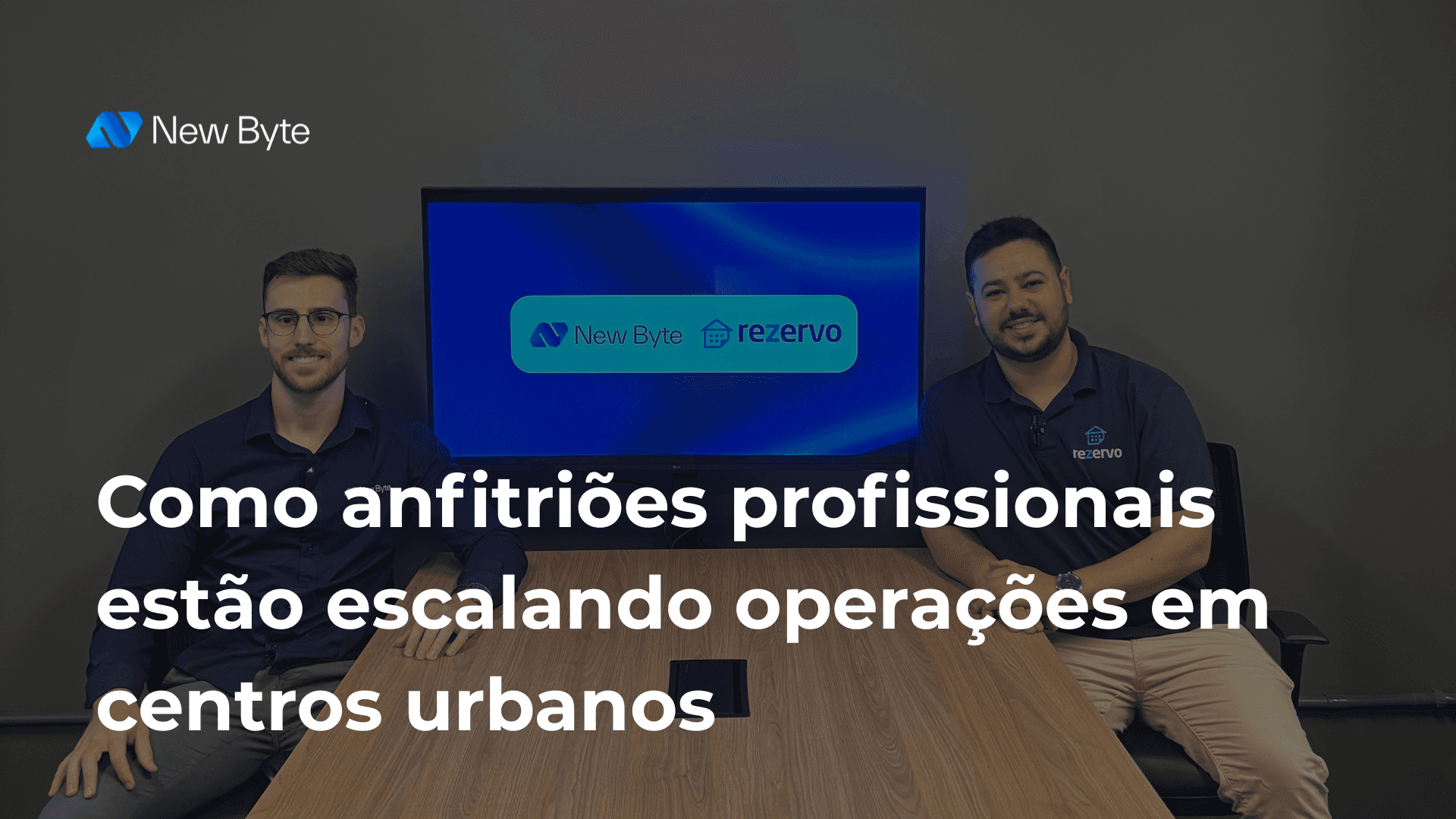
Short-term rentals are at a decisive moment in Brazil. The combination of more demanding guests, new travel dynamics, and the growing use of technology is redefining how hosts operate. On the New Byte Podcast, our CEO Arthur Bueno Stein spoke with Lucas De Franceschi, founder of Rezervo, about these transformations and what they mean for those looking to professionalize their operation.
This article brings together the key insights from that conversation, offering a practical and applicable view for professional hosts who want to operate with efficiency, scale, and quality.
The Modern Short-Term Rental Guest Profile in Urban Centers
Guest behavior has changed, especially in large cities. According to Lucas, Porto Alegre is a clear example: the majority of stays come from people seeking medical treatment, professional commitments, and event attendance. This guest, whom Rezervo calls the temporary resident, demands autonomy, speed, and clarity in information.
They don't want to depend on lengthy service interactions or bureaucratic processes. They want to handle everything easily on their phone, enter the property without difficulty, and have immediate access to essential information. This reality completely changes the operating standard for professional hosts.
Why Professionalization Is Essential for Increasing Profitability in Short-Term Rentals
As the market evolves, many hosts have realized that growth requires structure. During the podcast, Lucas highlighted an important observation: a manager's product is not the property itself, but the available nightly rates. And those nightly rates are perishable. If not sold today, the revenue is lost.
This perspective reinforces the need for organized operations, replicable processes, and efficient service. Additionally, it's important to contextualize: OTAs (Online Travel Agencies) like Airbnb and Booking account for the majority of booking distribution. However, according to Lucas, these OTAs have become stricter and have started removing listings with low ratings or inconsistent experiences.
This makes it clear: professionalization is not a trend. It is a basic requirement.
Technology for Hosts: Tools That Increase Efficiency and Scale
Technology is the foundation of the modern operation. It reduces errors, organizes workflows, and brings predictability to the business. Communication is one of the most critical factors for success, and also one of the most challenging.
During the podcast, the importance of tools like NChat from New Byte became evident. NChat centralizes conversations from Airbnb, Booking, WhatsApp, and Instagram in a single dashboard. For the modern guest, who sends messages at any hour, the speed and clarity of the response are part of the experience.
Another point mentioned was the application of artificial intelligence in communication. AI allows the host to maintain constant availability, filtering simple questions, forwarding instructions, and optimizing team time. It directly contributes to raising service quality and avoiding inconsistencies that hurt reviews.
Additionally, system integrations ensure that the host doesn't need to rely on spreadsheets or manual controls. As Lucas observed, no single tool solves everything. The real gain comes from the combination of connected technologies working together.
WhatsApp as a Direct Booking and Fast Service Channel in Short-Term Rentals
WhatsApp has become one of the main entry points for direct bookings. During the interview, Lucas mentioned that returning guests frequently reach out via WhatsApp looking for new stays. This behavior reduces commissions, increases margins, and strengthens the relationship with the customer.
By integrating WhatsApp with NChat, hosts have access to conversation history and can maintain more personalized service. Automation also helps in practical situations, such as sending access codes, arrival instructions, or building information, all contributing to a faster and more seamless experience.
Short-Term Rental Market Trends for 2026 and How Hosts Can Prepare
The market is moving toward more technological, standardized, and demanding operations. According to Lucas, three movements are expected to gain even more traction in the coming years: broader AI adoption, stricter OTA quality standards, and growing demand for efficient and immediate experiences.
In addition, new real estate developments are already being designed with the temporary resident in mind, including coworking spaces, digital reception desks, shared areas, and internal convenience stores. These are spaces built for business travelers who need practicality.
How Technology Partnerships Help Hosts Grow Safely and With Quality
In his appearance on the podcast, Lucas reinforced that solutions like New Byte's are essential for operations that want to grow without losing quality. The combination of automation, centralized communication, and clear processes allows hosts to dedicate more time to strategy and less to daily urgencies.
Growing safely means scaling while maintaining standards, something only possible with technological support.
The Future of Short-Term Rentals: Experience, Automation, and Smart Operations
The sector is moving toward a model where experience, efficiency, and technology complement each other. Hosts who invest in organization, communication, and automation will be better prepared to compete in an increasingly professional market.
New Byte remains committed to supporting this evolution, providing solutions that help hosts operate with quality, consistency, and scale, the elements that define the future of short-term rentals.