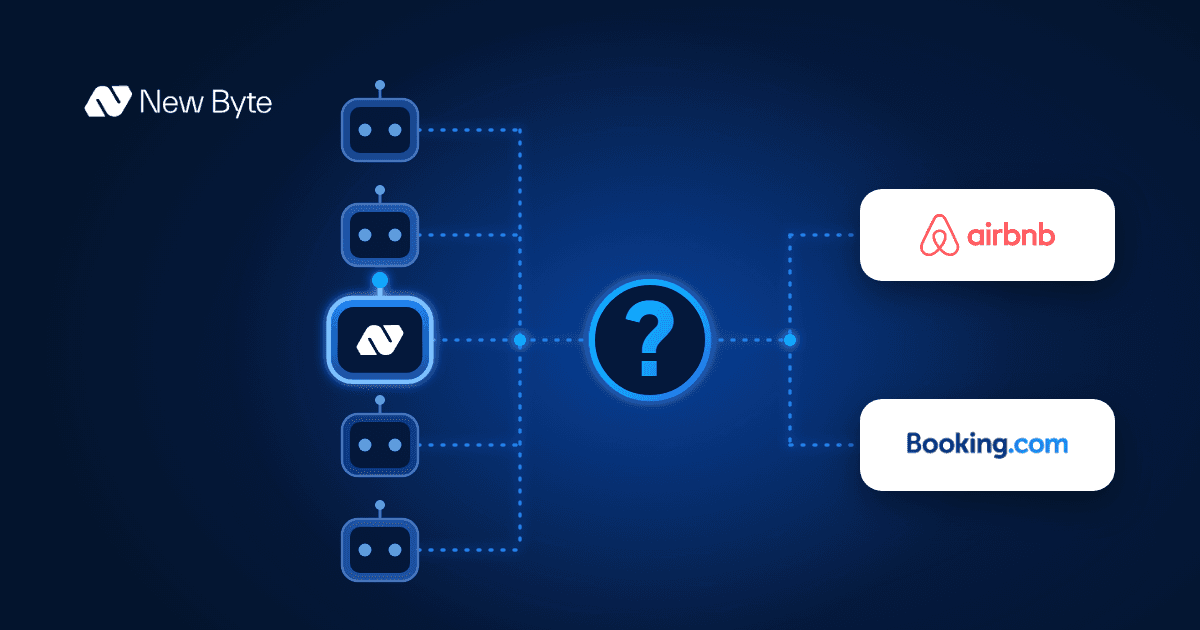
There is no such thing as the best AI in the abstract. There is the one that passes six criteria with your property, your channel and your channel manager on the table. Use this guide to compare any solution before you sign.
Saturday, 11:12 pm. A guest asks whether the house takes dogs, whether two cars fit in the garage and whether they can book today. You are at dinner, phone in your pocket. Every host asks the same thing at that moment: is there an AI that really solves this?
There is. But "which one is best" depends on what you call solving. Any AI demo works when the question is easy. What separates a good one from a decorative one is what happens to the 11:12 pm question about your property, with your pet rule and this week's price.
Why "the best AI" is the wrong question
A general-purpose assistant writes well, but it does not know your Saturday rate or whether your penthouse accepts animals. An AI built for hospitality has to get three things right at once: your listing data, the channel where the guest wrote, and the stage of the booking they are in.
So instead of asking "which is best", ask "which one passes these six criteria". They work for comparing any solution, ours included.
The 6 criteria for choosing a customer service AI
1. Does it use the official data of your listing?
An AI that answers from memory makes things up. A good one checks the official source: availability, price, rules and amenities coming from your channel manager, plus what only you know, like the gate that opens with the blue button. When sources disagree, the channel manager has to win.
Ask in the demo: where does each answer come from? And what happens when the information does not exist?
At Nia, that is the order: channel manager (Stays or Ayrton) first, then the property's NDocs, the base where you record what the AI should know, and finally the company-wide NDocs. This is also an honest limit: Nia depends on a connected channel manager, because that is what guarantees the official data.
2. Does it answer where the guest wrote?
Guests do not pick a channel for your convenience. They write on WhatsApp, in the Airbnb chat, in the Booking chat. An AI that lives in only one leaves the others unanswered, and every stalled message is a booking going cold.
Ask: in which channels does it answer on its own, and with what history?
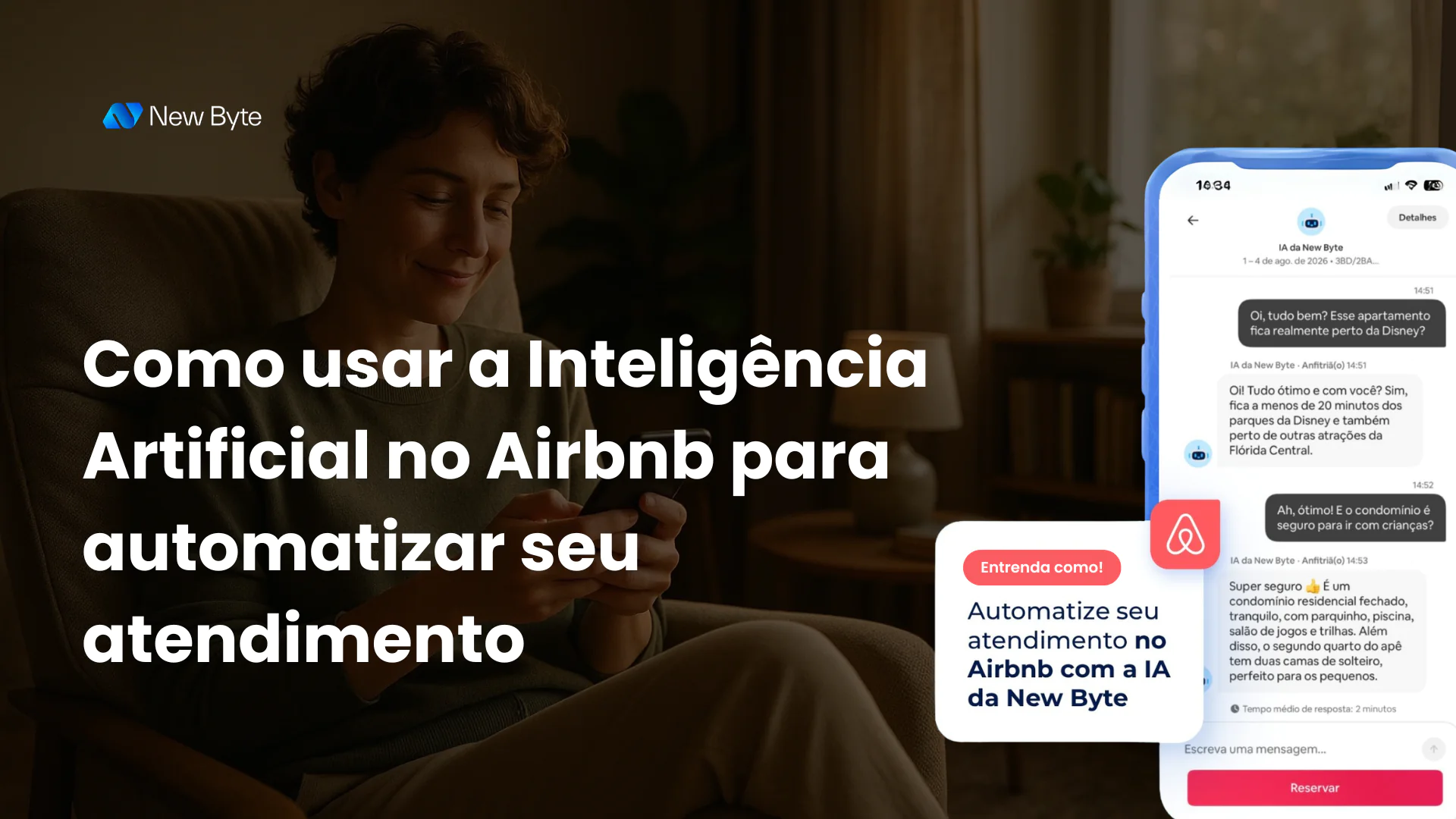
Nia answers on WhatsApp and in the OTA chats that reach you through the channel manager. In quotes, it understands audio and images and detects the guest's language with no setup. All conversations show up in NChat, so your team can follow along.
3. Does it take the conversation all the way to the booking?
Answering questions is half the job. The other half is turning the conversation into a booking without the guest waiting for someone. A mature AI collects dates, destination and number of guests, shows the available properties prioritizing the ones you want to sell first, and closes the booking, through your website's booking link or with the charge sent straight on WhatsApp.
Ask: where does the conversation end? In a booking link, in a charge, or just in a handoff to a person?
4. Does it know what it must not say?
The Wi-Fi password and the door code must not go to someone who has not booked yet. An AI with no access rules is a security risk that looks friendly.
Ask: how does it decide who can receive each piece of information?
At Nia, each piece of information has a level: public, for guests who have booked, or for guests already staying. The door code only shows up at the last one.
5. Does it know how to hand off to a person?
Urgent maintenance, complaints and rate exceptions are people's business. A good AI recognizes that limit and hands off without making the guest repeat everything.
Ask: what does my agent receive when the AI hands the conversation over?
Nia asks for the guest's confirmation before transferring and gives the agent a summary with the question, the sources consulted and a suggested routing.
6. Does it get better without becoming a chore for you?
No AI gets everything right on day one. What matters is how much work it takes to improve. If someone has to stop every week to update a spreadsheet, it will age.
Ask: what do I have to do for it to learn a new rule?
Nia needs no training to start: it understands the channel manager data from activation, and NDocs can be filled in gradually as repeated questions appear. NLearn then turns human answers into suggestions you approve before they become the AI's knowledge.
Question list to bring to the demo
- Where does each answer come from, and what happens when the information does not exist?
- In which channels does it answer on its own?
- Where does the conversation end: in a booking link, in a charge or in a handoff?
- How does it decide who can receive passwords and access codes?
- What does the agent receive when the AI hands the conversation over?
- What do I do for it to learn a new rule?
To see how AI covers each stage of a stay, also read the guide on AI customer service at every stage of the journey. And if your concern is the cost of slow replies, the math is in what slow replies cost in peak season.
So, which one is best?
The one that passes the six criteria with your operation on the table. Nia complements your channel manager, it does not replace it: Stays and Ayrton remain the official source, and the AI works on top of them.
Frequently asked questions
Does the AI replace my team? No. It handles the recurring, like quotes, house rules and access instructions, and hands to a person what needs a decision: maintenance, complaints and rate exceptions.
Do I need to train the AI before activating it? No. Nia understands the channel manager data from activation. NDocs are optional and can grow over time.
Does the AI answer foreign guests? Yes. Nia detects the guest's language and replies in the same one, with no setup.
Want to see Nia answering with the data of a test property? Book a demo.